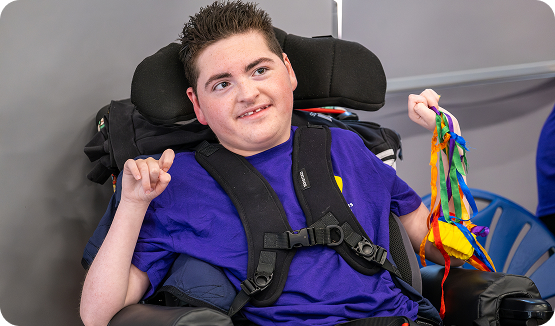
This case study shares the experience of Hugh through the reflections of his mum, offering insight into how Music of Life has supported his wellbeing, communication and connection through music.
The Impact of Music at Home and in School
What have you learned about how Hugh responds to music at home or through feedback from his teachers since being involved with Music of Life?
Through both his teachers’ feedback and what I see at home, I’ve learned that music has a very positive and grounding effect on Hugh. His teachers describe him as being relaxed, happy and noticeably more engaged when he takes part in Music of Life sessions. At home, I see the same response – Hugh has a genuine love of music and a wide-ranging taste, from 80s classics to heavy metal. I’ve also noticed that he willingly explores sound: he’ll strum string instruments independently and enjoy the sensory experience. All of this has shown me that music is not just something he enjoys, but something that helps him connect, focus and express himself.
“Music is not just something he enjoys, it helps him connect, focus and express himself.”
Music and Emotional Wellbeing
In what ways do you feel music influences his mood, engagement or sense of comfort?
Music has a clear calming and uplifting effect on Hugh. It helps him manage transitions and cope with new or unfamiliar experiences. When music is present, he becomes more settled and confident. His mood brightens – he will smile broadly and show clear signs of enjoyment when he hears something he likes. Even in busy or noisy environments, music seems to help him maintain comfort and reduce distress, allowing him to engage more fully with the world around him.
Experiences During Music of Life Sessions
When you see him in Music of Life concerts or musical moments, what do you notice about how he experiences those situations?
Watching Hugh in Music of Life concerts has made me incredibly proud. In those moments, I notice that he is fully present: he looks around and seems to enjoy being part of something bigger. His teachers mention that he makes eye contact and seems aware of everything happening in the room. He appears relaxed yet alert, and there is a real sense of joy and participation.
“Music has a very positive and grounding effect on Hugh.”
Expression Through Music
How does Music of Life help him express himself, and what signs do you look for?
Music of Life gives Hugh a space where he can express preferences and emotions in ways that feel natural to him. His teachers look for cues such as facial expressions – a frown if he dislikes a song or a big grin when he hears something he enjoys. I see similar signs at home. He may vocalise more, strum an instrument, or lift his head with interest. These small but meaningful signals are how he communicates his likes, dislikes and emotional responses, and music provides the perfect channel for that expression.
Music in Daily Life
What role does music connected to Music of Life play in his weekly routines, and have you observed any new behaviours?
Music has become part of Hugh’s weekly rhythm, and his Music of Life sessions seem to reinforce his confidence with sound and instruments. At home, he often seeks out musical experiences independently, such as strumming string instruments.
“When music is present, he becomes more settled and confident.”
What Music of Life Means to Hugh
What would you like Music of Life to understand about Hugh and the place music holds in his life?
I would like Music of Life to know that music plays a truly important and meaningful role in Hugh’s life. It brings him happiness, helps him feel calm and secure, and gives him a way to communicate that feels authentic to him. He benefits enormously from the opportunity to engage with music in a structured yet supportive setting, and the sessions allow him to have a voice – through his reactions, his expressions and his enthusiasm. Music is one of the ways he connects with the world, and being part of Music of Life enriches that connection.